Welcome to my blog

Monday, 30 April 2012

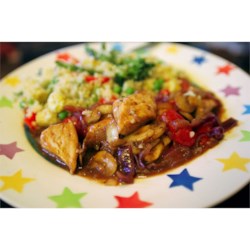
Veneto Chicken Recipe


Ingredients

  • 3 large tomatoes - peeled, seeded and chopped
  • 1 (3 pound) whole chicken, cut into pieces
  • 4 tablespoons olive oil
  • 1 onion, chopped
  • 1 stalk celery, chopped
  • 1/2 cup dry white wine
  • 1/4 teaspoon dried oregano
  • 1 pinch salt
  • 1 pinch ground black pepper
  • 2 tablespoons balsamic vinegar
  • 1/4 pound fresh mushrooms, sliced

Directions

  1. Dredge chicken lightly in flour. Heat oil over medium-high heat. Fry chicken pieces briefly, turning to brown evenly. Add onion and celery; cook 1 to 2 minutes. Stir in wine and chopped tomatoes. Season with oregano, and salt and ground pepper to taste. Cover, reduce heat, and simmer gently for 30 minutes, turning pieces once.
  2. Pour in balsamic vinegar and mushrooms, and cook another 5 to 10 minutes.

Sunday, 29 April 2012

Italian Region: Veneto


Name of the region
Veneto
Population
4,936,197
Language (Dialect)
Most of the people of Veneto speak standard Italian. However, there is general usage of Venetian language. Venetian language is classified as a Western Romance language, scholars with certain degrees are able to speak Venetian.
Staple foods of Italy and of the region
The staple foods in Italy are known as: Pasta, Veal, Wine, Olive Oil, Herbs, Pancetta, Cannellini Beans, Bread, Tomatoes, Garlic, Cheese, Bell Peppers and Olives. Veneto is an agricultural region growing wheat, maize, mulberry bushes, olives, fruit trees and vines. Veneto food mainly consists of rice, vegetables, meat, seafood, wine.
Geographical information
The Veneto region is located on an 10,000 square miles in North-eastern Italy. Veneto has three major rivers, (The brenta, adige and piave) which flows throughout the region. The best known city is the region Venice, one of the biggest seaport in Europe, its economy is targeted around the amount of tourists visit. Venice also offers world artistic attractions, including the Venice Film Festival, The Biennale Art Show and the Carnivale.
How does the location of the region impact on the food selected to consume
Since Veneto is a very water based region, most of their food consists of vegetables, something you can grow, and won’t take up too much space. Something you can grow without it being flooded. They also like their seafood, since there’s a lot of it, but they mainly focus on consuming foods that are simple. It does impact quite a lot since it does flood most of the time, so they can’t grow crops, ect.
List 3 similarities and 3 differences with surrounding regions
-          (D) Veneto is not as keen on pasta as other regions; they rather make gnocchi or rice.
-          (D)Veneto’s main city, Venice is famous for its canals, which is a favourite for tourist, which other regions don’t offer.
-          (D) Veneto is more focused on their making of food, than growing it, like other regions, they focus around cooking main meals and creating dishes.
-          (S)Veneto is one of the best wine makers; they have excellent vineyards, as do many other regions of Italy
-          (S) Veneto is famous for their tourism, just like other popular regions in Italy.
-          (S) Veneto is also very popular on Pizza, Pasta, Gelato also like other regions.

Sunday, 15 April 2012

How Coffee is processed

Berries are collected and handpicked by workers.
U+2193.svg
Delivered to processing factory.
U+2193.svg
Berries are then dried out in the sun or wet and washed.
U+2193.svg
They sort out the berries, depending on its appearance.
U+2193.svg
Coffee beans are roasted and processed, ready to be brought. 

Plantain Recipes

Tostones

Ingredients:
2 green plantains
Oil for frying
Salt
Directions:
Heat the oil to 375 degrees.
While the oil is heating up, peel the green plantains and then cut them into 3/4 inch slices.
Fry the slices in the hot oil for 3 minutes. They should be a light golden color and semi-soft.
Remove the plantain slices with a slotted spoon and drain on paper towels.

Sweet Plantains

Ingredients:
1/4 cup peanut oil for frying
2 tablespoons butter
3 yellow plantains (very ripe), peeled and cut in 1-inch-thick slices
3 tablespoons brown sugar
1/4 teaspoon salt (optional)

Directions:
Heat peanut oil and butter in a large skillet over medium-high heat until the butter begins to sizzle. Gently toss plantain slices with brown sugar, then place into hot oil. Fry until the plantains begin to turn golden brown, then turn over, and continue frying until they have caramelized, about 2 minutes per side.
Drain plantains on a paper towel-lined plate and sprinkle with salt before serving.

Oven Baked Sweet Plantians

Ingredients:
4 very ripe plantains (when the skin is yellow with spots of black they're perfect)
cooking spray

Directions:
Preheat oven to 450°F.
Coat a nonstick cookie sheet with cooking spray.
Cut the ends off of the plantains and peel.
Cut each plantain on the diagonal into 1/2 inch slices.
Arrange in single layer and coat tops with cooking spray.
Bake, turning occasionally, for 10-15 minutes, until plantains are golden brown and very tender.


Ripe plantain bread

Ingredients:
1 cup mashed ripe plantain
1/2 bar margarine
1 1/4 cups flour
2 eggs
1 1/2 cups sugar
1 teaspoon baking soda
4 tablespoons sour cream
1 teaspoon vanilla
1 teaspoon baking power

Directions:
Beat margarine until soft; add sugar, eggs and sour cream.
Blend plantains, flour, baking soda and baking powder. Add them to the previous mixture. Add the vanilla and beat thoroughly.
Pour the mixture into a greased and flower pan. Bake in a preheated oven at 350 degrees for about an hour. Check with a wooden toothpick. When it comes out dry, the bread is done.
Biography

King Jong II came in rule on October 8th, 1994. He came into rule due to his father’s death, King II Sung.  His style of leadership was organised and well thought-out, it was known that he knew what he was doing and was a man of ideas.  He left an immoral impact on North Korea, he was inhumane towards them, gave them no rights, let them suffer through poverty and starvation. After King Jong II died, his son John Un took his power, it was known that if King Jong II died, John Un would be the first preference. 

Chinese Timeline

Date
Event
China
1934
The Long March
Mao was trying to take over China. So China tried to stop and defeat Mao by the long march, and reclaim their power of China.
1937
The Nanjing Massacre
People of China are embarrassed by this event; they try to not speak of this event as much as possible. The Chinese were attacked by the Japanese and were embarrassed by how small Japans republic was and how they managed to attack, when they have a bigger population.
1952
The Abolishment of Individual Land Ownership
They abolished the laws of owning or buying/trade. No one owned anything, and people of China were equal.
1957
Hundred Flower Campaign
Let the people of china understand how to redeem what they’ve done in the past to make them a better person. It was to make goals and fulfil dreams, and make a better person of themselves.
1958
The four pests program/campaign
China decided that a lot of animals would ruin the crops a lot of pests, would ruin their trade and they would lose money, and this program was started so they could kill the animals and keep growing their crops.
1971
The Ping-Pong Diplomacy
The Ping pong diplomacy was negation with America and China and the first Americans invited to china in over 20 years.
1976
The Gang of Four
These four individuals worshiped Moa and his ideas; they were dedicated to helping and carrying on his evil.
1979
The One Child Policy
The One Child policy was a policy that applied to half the population of china. It was a policy to allow the population to know that the numbers or people were growing so they made a law that every 10 years they were allowed to have 1 child. This rule still applies.
1999
The Fallon Gong
A group of people known as the Fallon Gong were promoting Mediation to make a better person out of themselves and make a world a better place.
2008
Beijing Olympic Games
An event that was held in china to hold the Olympic Games. The events lead to a lot of popularity for china, especially its economic growth.


Dates missing are the people who were away.

Sunday, 12 February 2012

The Caste System

The caste system is a certain arrangement to separate everyone and put them into their chosen caste group. The caste system has been separated into 5 separate groups. Caste gave some people special rights and privileges that others did not have.

The top of the group were the Brahmins (Teachers, scholars and priests) then the Kshatriyas (Warriors, law enforcers, administrators) then the Vaishyas (Farmers, cattle-herders and traders) then the Shudras (service providers, workers who did not own land or businesses, servants) and then the Pariah’s (Outcasts).

The caste system is used because these certain classes don’t want to reproduce with people lower than their class. They socialize with their own class and marry among the group.

The classes also changes what meals certain people get along the Caste System. The Brahmins and Vaishyas food custom included fruits, milk, honey, roots and vegetables. Shudras groups eat different kinds of meat (not beef). The Kshartriyas eat kinds of meat like, deer.